
 CATEGORIES
Blogs
What are the different types of light bulbs? Complete and Updated Guide

What are the different types of light bulbs? Discover the main and latest light bulb technologies for lighting. Compare the comparison table between the different types of bulbs, compare the duration, type of ignition and consumption of the different bulb technologies.
 The types of light bulbs most commonly used are: incandescent bulbs, fluorescent bulbs, halogen bulbs, LED bulbs and magnetic induction lamps.
Incandescent light bulbs
 Let's start with the old ones incandescent bulbs, where the production of light takes place by bringing a tungsten metal filament to incandescence, at a temperature of 2700 K, by the Joule effect. In incandescent light bulbs, only 5% of the energy that powers them is converted into light, the remaining 95% is wasted in heat. However, on 8 December 2008, the European Commission for Energy approved its ban in all Member States, according to a program of progressive replacement starting from September 2009, with completion by 2012.
Halogen bulbs
 An evolution of these bulbs are the most commonly named halogen bulbs. On the market you can find two different types of halogen bulb, the mains voltage one and the variant halogen at very low voltage. The substantial differences are found primarily in the tension: a halogen bulb mains voltage is powered by 220v while very low voltage ones have only 12v, from which we can summarize that the halogen bulbs at very low voltage they have less power available for lamp with up to 100w. These, thanks to the limited energy consumption for their operation, are very convenient, especially for the low prices they have on the market, the downside is that they can be used in confined spaces or that require a very limited light input.
Fluorescent light bulbs
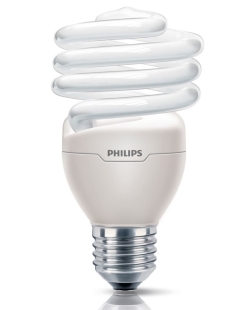 Continuing the evolutionary process of the light bulbs used in our cases, we move on to fluorescent lamps or more commonly called "energy saving”. They are particular type of discharge lamp in which thelight emission visible is live, i.e. it is not emitted directly from the ionized gas, but from a fluorescent material (hence the name). This type of lamps are incorrectly called neon lamps or neon tubes, but they don't always contain neon and actually their functioning is mainly due to the presence of mercury vapor and fluorescent materials, and not neon. A different composition of the fluorescent material allows to produce a warmer or colder light.
LED bulbs: the last frontier of lighting
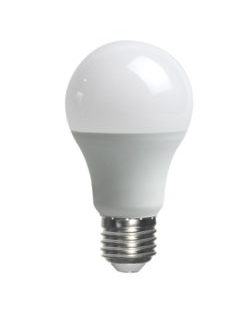 The most advanced alternative of the previous bulbs are the LED lamps, powered by a special electronic circuit, whose purpose is mainly to reduce the mains voltage to the few volts required by the LEDs. The LED is cold, i.e. it heats up little. At most it reaches 40° on the outside, in this way it guarantees the optimization of efficiency with less energy wasted and therefore less energy used. These last longer they consume less, they are resistant (to shocks and blows) and above all they have a lower environmental impact. We are talking about led light bulbs for home, last frontier of ecological lighting in the home. The light is produced through a physical process in the diode junction, which gives rise to the emission of photons, of a well-defined color depending on the energy released in the recombination. Unlike incandescent bulbs which end their life when the filament burns out, the LEDs degrade slowly with a loss in brightness that drops off at 20-30%. More precisely the brightness of the LED system drops by 3% after the first 3,000 hours of illumination, to then remain constant up to 100,000 hours (which moreover correspond to 11 years old of use 24 hours a day), after which there is a drop of the 70%. From an economic point of view, LEDs are more expensive than filament bulbs, but the operating life of an LED, which is around 50 000-80 000 hours, is far superior to the life of a traditional light bulb. Currently the most commonly used light bulbs or luminaires are guaranteed for 20,000 hours. From an energy point of view, LEDs are much more efficient than filament bulbs since the 50% of the energy absorbed produces illumination and therefore the amount of energy wasted in the form of infrared radiation and heat released into the environment are very small compared to conventional technologies. of traditional lighting. In fact the latest Led bulbs produce only 60 lumens (while a traditional incandescent bulb from 40 watts equals 490 lumens) for single use 3.4 watts/hour.
The 1 or 2 Watt LED bulbs can also be used to illuminate the salt lamps; the effect of the LED light diffused through the rock salt crystals creates an enveloping and comfortable atmosphere.
The most advanced alternative of the previous bulbs are the LED lamps, powered by a special electronic circuit, whose purpose is mainly to reduce the mains voltage to the few volts required by the LEDs. The LED is cold, i.e. it heats up little. At most it reaches 40° on the outside, in this way it guarantees the optimization of efficiency with less energy wasted and therefore less energy used. These last longer they consume less, they are resistant (to shocks and blows) and above all they have a lower environmental impact. We are talking about led light bulbs for home, last frontier of ecological lighting in the home. The light is produced through a physical process in the diode junction, which gives rise to the emission of photons, of a well-defined color depending on the energy released in the recombination. Unlike incandescent bulbs which end their life when the filament burns out, the LEDs degrade slowly with a loss in brightness that drops off at 20-30%. More precisely the brightness of the LED system drops by 3% after the first 3,000 hours of illumination, to then remain constant up to 100,000 hours (which moreover correspond to 11 years old of use 24 hours a day), after which there is a drop of the 70%. From an economic point of view, LEDs are more expensive than filament bulbs, but the operating life of an LED, which is around 50 000-80 000 hours, is far superior to the life of a traditional light bulb. Currently the most commonly used light bulbs or luminaires are guaranteed for 20,000 hours. From an energy point of view, LEDs are much more efficient than filament bulbs since the 50% of the energy absorbed produces illumination and therefore the amount of energy wasted in the form of infrared radiation and heat released into the environment are very small compared to conventional technologies. of traditional lighting. In fact the latest Led bulbs produce only 60 lumens (while a traditional incandescent bulb from 40 watts equals 490 lumens) for single use 3.4 watts/hour.
The 1 or 2 Watt LED bulbs can also be used to illuminate the salt lamps; the effect of the LED light diffused through the rock salt crystals creates an enveloping and comfortable atmosphere.
Magnetic induction lamps
 Magnetic induction lamps they are based on the principle of magnetic induction which allows the ionization of a fluorescent gas to be generated without the presence of electrodes. This technology devised by brilliant scientist Nikola Tesla, is not much different from that of normal fluorescent bulbs; in fact, magnetic induction lamps have a completely sealed bulb inside which a magnetic field is generated which produces the discharge inside the gas which produces the illuminating radiation. Induction lamps are considered by many to be the future of lighting, especially for power sizes above 150W for which LEDs are too expensive. Advantages of magnetic induction lamps?
-
- Extremely long life, up to 100,000 hours of operation
- Immediate ignition, the magnetic induction lamps immediately dispenses the 90% of light
- Very low light output decay: about 20% in 90,000 hours of operation
Related Posts

Conto Termico 2018: the latest updates

Il Conto Termico, l’incentivo statale sull’acquisto di nuovi apparecchi per il riscaldamento di ultima generazione, ha ricevuto due agg...
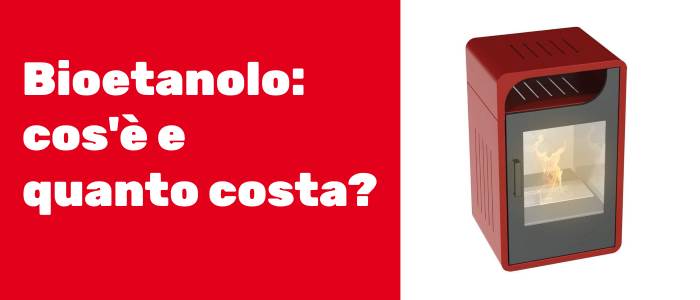
Bioethanol stoves: how they work and how much they cost
Bioethanol: what is it and how much does it cost? Bioethanol is an alcohol (chemical formula CH2O6) used as a liquid biofuel which is obtained...

Led light: how many lumens? Here is the comparison table with all types of bulbs
LED bulbs allow you to have great energy savings compared to traditional bulbs, by changing the bulbs at random...

Conto Termico 2016: the Complete Guide to Requesting the Incentive
Il Conto Termico 2.0 è un incentivo che consente di sostituire la propria vecchia stufa a legna o a pellet con un nuovo apparecchio di ultima generazione dotato di ridotte emissioni e migliori prestazioni
Devi sostituire la vecchia stufa a legna o la caldaia a gasolio? Scopri come richiedere un incentivo fino al 65% della spesa totale!
Choosing light bulbs: lumen and watt let's clarify
Lumens and watts: what are they? Can they help me choose the bulbs? Here is the comparative table that allows you to compare the lamps...
Guide to the tax deduction for sunscreens
In this guide we will describe how to take advantage of the 65% tax deduction for the purchase and installation of solar shading....
Energy saving? LED bulbs are a solution
Finally, Led bulbs are starting their climb to become the most used in our homes, which ...


